|
|
TRAPEZIDAE |
Next species NYA> |
|
Click on an image to enlarge
|
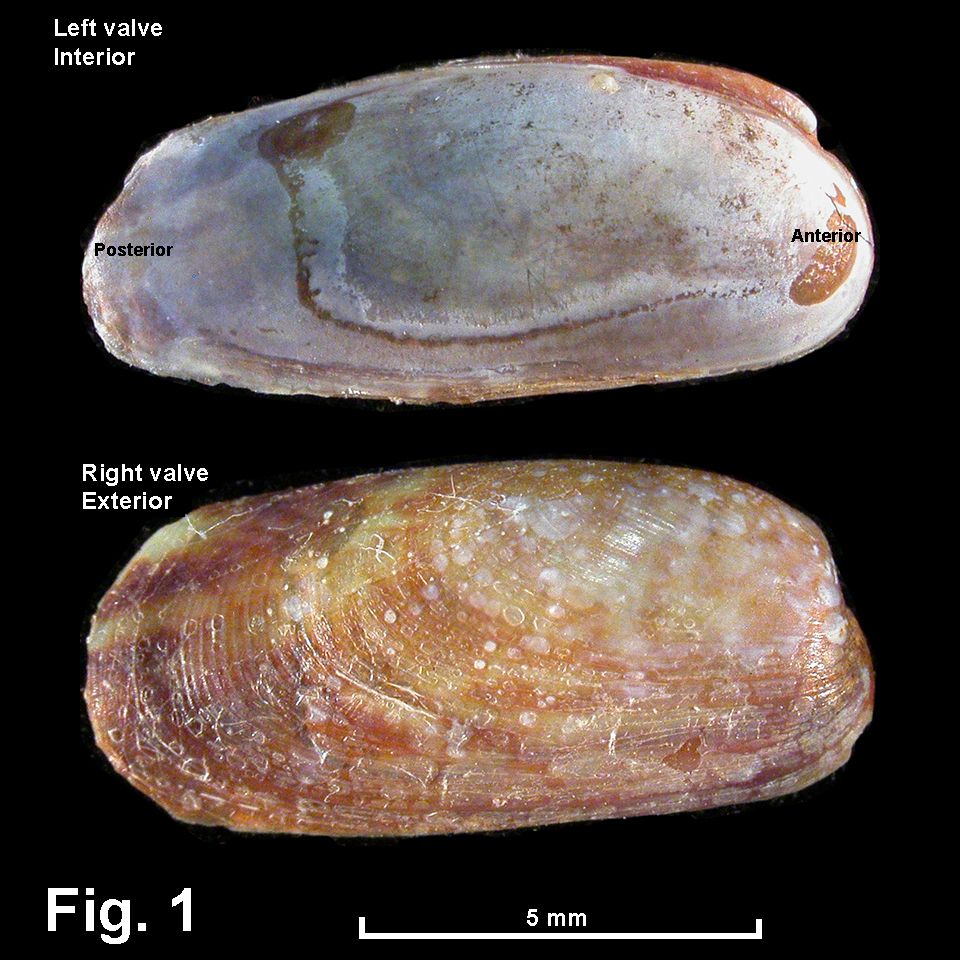
Fluviolanatus subtortus (Dunker, 1857) Description: Shape elongate,
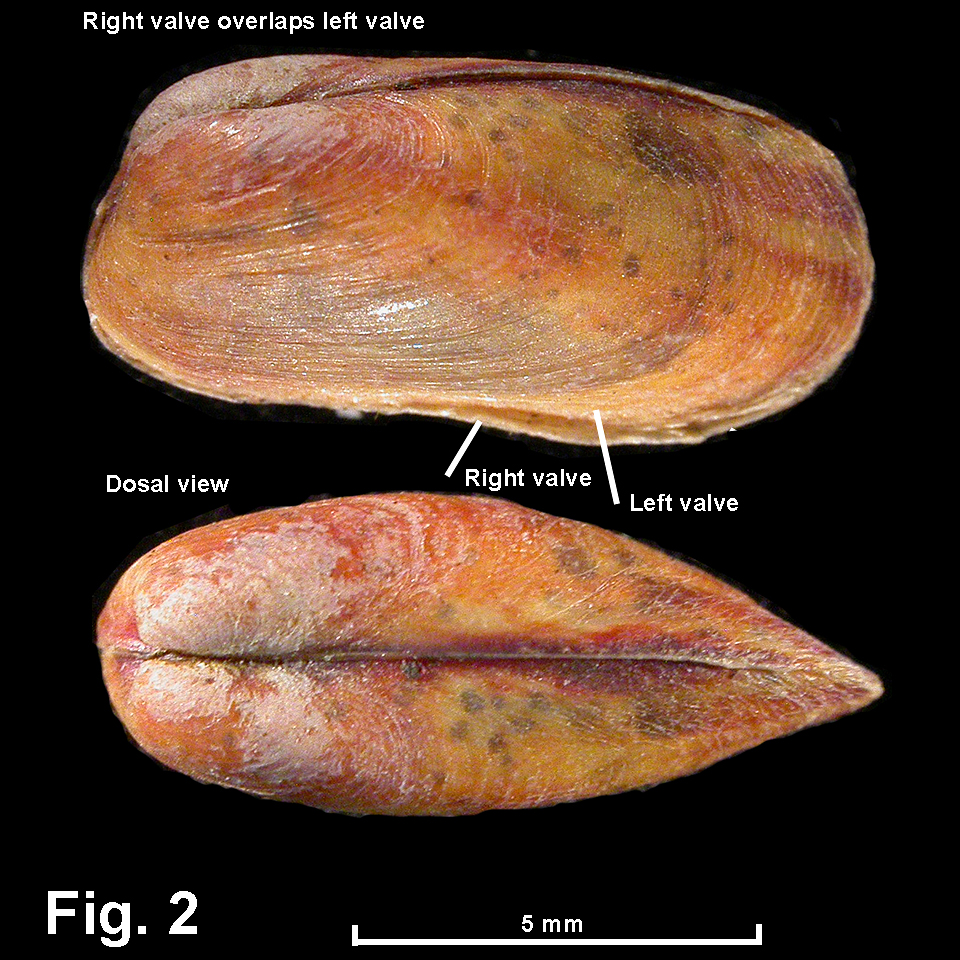
mytiliform, umbo at or near anterior end; right valve larger, slightly
overlapping left (Fig. 2); proportion of height to length variable;
ventral margin straight, without a byssal notch; shell thin and fragile.
Exterior with weak, irregular growth ridges. Interior
muscle scars nearly circular, pallial line distant from posterior end,
but there is no pallial sinus. Hinge teeth absent. Ligament
internal, long, thin and fused periostracum. Byssus present when live. Shell
fawn with purple-brown zones, sometimes with 2 or 3 purple-brown
rays posteriorly; usually covered with thick brown
periostracum. Size: Up to 15 mm in length. Distribution: The distribution of this
species is unclear and enigmatic. The Australian Museum holds specimens
from Cairns, Qld, southwards to Batemans Bay, NSW, but Slack-Smith
(1998) said it occurs along the entire east coast of Australia from
Northern Territory southwards to Victoria, and also south-western WA. It
is absent from Tasmania. It possibly also occurs elsewhere in the
western Pacific Ocean. Habitat: Attaches to vegetation with fine
byssal threads in coastal lagoons and estuaries in regions of low or
variable salinity, even in freshwater. Sometimes individuals form
clusters attached to each other by their byssal threads. The Australian
Museum holds specimens from many localities from around Sydney; it was
collected in Dee Why Lagoon in the 1950s, but it appears to be absent
from there at the time of writing (2026). It has been reported from
within freshwater irrigation pipes at Burleigh Golf Club, southern
Queensland (R. Willan, pers. com). Synonymy: Fluviolanatus
amarus Laseron, 1956 is a later name for this species. Remarks: This enigmatic species, which recalls a miniaturised Arenifodiens
vagina marine mussel in outline, was previously placed in
Mytilidae, but a study of the anatomy and shell by Morton (1982) placed
it in Trapezidae. Fig. 1: Kurnell, Botany Bay, NSW (C.227279) Fig. 2: Dee Why Lagoon, Sydney, NSW (C.30466) |
|